I've always liked Japanese anime and manga. Both media usually offer something less predictable than American genre fiction, comics, or films. At their most creative, artists and writers like Junji Ito have a knack for thinking outside of the box or re-working the box completely.
Ito has been working in manga for decades now and has produced a prodigious amount of horror stories and he's becoming quite popular with English-speaking audiences. Most of his work is horror or sci-fi, but isn't above doing something down to earth like his Cat Diary.
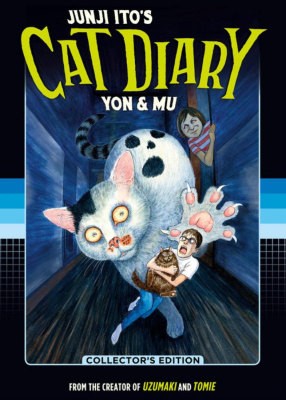 His style blends visceral horror with mind-bending weirdness in a concoction that's uniquely his. His art is meticulous and vivid, conjuring fascination and revulsion at the same time. He is every bit the equal of Clive Barker with body horror.
Let's take a dive into the English editions of his work:
His story collection Lovesickness includes a couple of episodes of the Hikizuri siblings. A considerable amount of Ito's work features neurotics, but this family is particularly demented. "Naurumo's Boyfriend" involves faking a death by immolation and scaring someone to death while "The Seance" is a tale of manipulation, underscoring the family's destructive relationship.
The most traditional monsters Ito depicts are evil spirits, but he took an unusual turn with the title story in his collection, Frankenstein. It stays mostly true to the events of the original, but the climax feels rushed. The best feature is Ito's artwork.
Lovecraft once defined the Weird Tale as something that couldn't possibly happen, which is a good summary of most of Ito's work. Naturally, this aesthetic makes the reader question what's really happening. In the Frankenstein collection, we have stories featuring Oshikiri and his strange house that sits on a dimensional portal. Occasionally, other people come through the portal, including an evil version of himself. In "The Intruder," he meets some new friends who seek out supernatural phenomena. They visit the house where his evil doppelganger is burying a corpse, which creates further complications. In "The Strange Tale of Oshikiri," he realizes his doppelganger is experimenting on his classmates, turning them into monsters.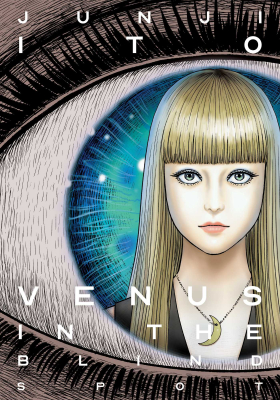
Notable stories from Deserter include "Where the Sandman Lives" about a man who becomes aware that his dream self is trying to enter the real world and turns his physical body inside out. Another memorable tale is "Long Hair in the Attic" in which a woman who grew her hair out to please her boyfriend. He breaks up with her, and the story results with a gruesome disembodied head and grisly death.
The Kafkaesque quality of Ito's comics really comes out in Fragments of Horror. The tale "Red Turtleneck" was the first of Ito's I ever read. It involves a man seduced by a witch and makes him think she has decapitated him, so he struggles to keep his head on his body. This image is memorialized on the cover of the book as a homage to Edvard Munch's The Scream. "Whispering Woman" is about a girl unable to make decisions for herself, so her dad hires a caregiver to help her. The caregiver continues to help even after death.
The Japanese writer Edogawa Rampo developed a subgenre "eroguro nonsensu" (eroticism, grotesquerie, and the nonsensical). These elements appear repeatedly in Ito's comics. He adapted Rampo's famous story "The Human Chair" and turned the tension up a notch. It was collected in Venus In the Blind Spot.
Some of Ito's best work appear in his collections Smashed and Shiver. In Smashed, there is "I Don't Want to Be a Ghost" a strange piece about a man who has an affair with a woman who eats ghosts. "Library Visions" is a chilling exploration of OCD and monomania. A young man with an enormous library becomes consumed with protecting it to the point of insanity, particularly when he loses two books that embody his dead parents and their disparate personalities. Even stories with more familiar themes like an army of vampire bats in "Blood Sucking Darkness" is still engrossing.
In Shiver, we have the title story that might strike a chord with some readers. A cursed jade carving causes the holder to be riddled with holes, playing on trypophobia (the fear or revulsion of seeing a hive-like pattern). It's truly chilling. "The Long Dream" is about a hospital patient who is gradually having longer dreams. Some last months and others for thousands of years in the space of one night in real time. It's a harrowing tale of cosmic horror that the Lovecraft Circle could have dreamt up.
 Based on my experience, Ito's penultimate accomplishment is his graphic novel Uzumaki about a town cursed by manifestations of spirals in the air, in forms of death, weather, or even snails. It evolves into an apocalypse that is difficult to sum up in just a few words. I recommend watching the live film adaptation of this one.
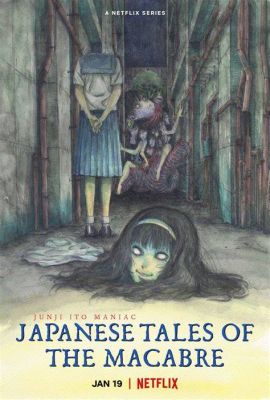
Several of Ito's tales were adapted into a Netflix anime called Junji Ito Maniac. The show lasted one season, but it's decent. Unfortunately, it's version of "Library Visions" seemed to have missed the point of the story.
Junji Ito is a master of the macabre and the stories I highlighted here serve as good examples why.
Written by Nick Montelongo
Ito has been working in manga for decades now and has produced a prodigious amount of horror stories and he's becoming quite popular with English-speaking audiences. Most of his work is horror or sci-fi, but isn't above doing something down to earth like his Cat Diary.
His style blends visceral horror with mind-bending weirdness in a concoction that's uniquely his. His art is meticulous and vivid, conjuring fascination and revulsion at the same time. He is every bit the equal of Clive Barker with body horror.Let's take a dive into the English editions of his work:
His story collection Lovesickness includes a couple of episodes of the Hikizuri siblings. A considerable amount of Ito's work features neurotics, but this family is particularly demented. "Naurumo's Boyfriend" involves faking a death by immolation and scaring someone to death while "The Seance" is a tale of manipulation, underscoring the family's destructive relationship.
The most traditional monsters Ito depicts are evil spirits, but he took an unusual turn with the title story in his collection, Frankenstein. It stays mostly true to the events of the original, but the climax feels rushed. The best feature is Ito's artwork.
Lovecraft once defined the Weird Tale as something that couldn't possibly happen, which is a good summary of most of Ito's work. Naturally, this aesthetic makes the reader question what's really happening. In the Frankenstein collection, we have stories featuring Oshikiri and his strange house that sits on a dimensional portal. Occasionally, other people come through the portal, including an evil version of himself. In "The Intruder," he meets some new friends who seek out supernatural phenomena. They visit the house where his evil doppelganger is burying a corpse, which creates further complications. In "The Strange Tale of Oshikiri," he realizes his doppelganger is experimenting on his classmates, turning them into monsters.
Notable stories from Deserter include "Where the Sandman Lives" about a man who becomes aware that his dream self is trying to enter the real world and turns his physical body inside out. Another memorable tale is "Long Hair in the Attic" in which a woman who grew her hair out to please her boyfriend. He breaks up with her, and the story results with a gruesome disembodied head and grisly death.
The Kafkaesque quality of Ito's comics really comes out in Fragments of Horror. The tale "Red Turtleneck" was the first of Ito's I ever read. It involves a man seduced by a witch and makes him think she has decapitated him, so he struggles to keep his head on his body. This image is memorialized on the cover of the book as a homage to Edvard Munch's The Scream. "Whispering Woman" is about a girl unable to make decisions for herself, so her dad hires a caregiver to help her. The caregiver continues to help even after death.
The Japanese writer Edogawa Rampo developed a subgenre "eroguro nonsensu" (eroticism, grotesquerie, and the nonsensical). These elements appear repeatedly in Ito's comics. He adapted Rampo's famous story "The Human Chair" and turned the tension up a notch. It was collected in Venus In the Blind Spot.
Some of Ito's best work appear in his collections Smashed and Shiver. In Smashed, there is "I Don't Want to Be a Ghost" a strange piece about a man who has an affair with a woman who eats ghosts. "Library Visions" is a chilling exploration of OCD and monomania. A young man with an enormous library becomes consumed with protecting it to the point of insanity, particularly when he loses two books that embody his dead parents and their disparate personalities. Even stories with more familiar themes like an army of vampire bats in "Blood Sucking Darkness" is still engrossing.
In Shiver, we have the title story that might strike a chord with some readers. A cursed jade carving causes the holder to be riddled with holes, playing on trypophobia (the fear or revulsion of seeing a hive-like pattern). It's truly chilling. "The Long Dream" is about a hospital patient who is gradually having longer dreams. Some last months and others for thousands of years in the space of one night in real time. It's a harrowing tale of cosmic horror that the Lovecraft Circle could have dreamt up.
Based on my experience, Ito's penultimate accomplishment is his graphic novel Uzumaki about a town cursed by manifestations of spirals in the air, in forms of death, weather, or even snails. It evolves into an apocalypse that is difficult to sum up in just a few words. I recommend watching the live film adaptation of this one. Several of Ito's tales were adapted into a Netflix anime called Junji Ito Maniac. The show lasted one season, but it's decent. Unfortunately, it's version of "Library Visions" seemed to have missed the point of the story.
Junji Ito is a master of the macabre and the stories I highlighted here serve as good examples why.
Written by Nick Montelongo
The author does not allow comments to this entry
No comments