If you’ve known me for any length of time, you know that I love cats. To me, they’re furry, adorable children who are either sleek and graceful, or accident prone whirlwinds of chaos. Either way, they are fun, if a pain in the ass on occasion. There is something about their neurotic temperaments that make them as human as you or me, especially when they demand service every minute on the minute. They can also be cuddly and sweet companions. Maybe this is why it strikes a chord with me when they are in horror stories or movies since they elicit sympathy or disturb me profoundly. They also make up a notable portion of horror’s rich tapestry.
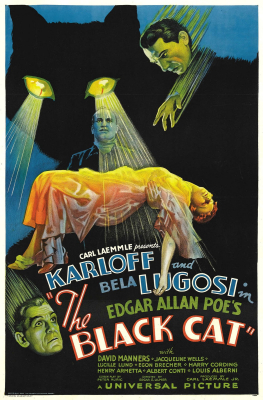 One of the earliest horrific stories I’ve ever read featuring cats is obviously “The Black Cat” by Edgar Allan Poe. If you’re not familiar, the tale is about a disturbed man who starts abusing his beloved pets. His black cat Pluto isn’t having it, though. No matter what happens, Pluto keeps returning, even from the dead, and haunts the main character to the point of revealing the hiding place of his wife’s murdered corpse at the end. Don’t read into this thinking that Poe was a pet abuser. He loved animals. Apparently, he had a cat named Katterina that sat over his shoulder as he wrote as if looking on in approval. “The Black Cat” was adapted for film several times, most notably in The Black Cat (1934) starring Bela Lugosi and Boris Karloff. There isn’t anything in the film that has any genuine connection to the story, but it’s still a cool movie about a POW camp survivor (Lugosi) who confronts the man who was responsible for his family’s deaths (Karloff), who is also the leader of a satanic coven. It was a rare semi-heroic role for Lugosi and one of his best performances. In 1941, Lugosi played in another film called The Black Cat in which he co-starred with Basil Rathbone. It is an “old dark house” mystery type of movie replete with murder, a gothic mansion, and secret passageways. Good fun for all.
Numerous horror writers were cat people too. A cat plays a role in one of Lovecraft’s most important stories “The Rats in the Walls” although I won’t go out of my way to mention the feline’s name. Robert Bloch was known for loving cats and dedicated his novel Night-World to his pets. “Catnip” is one of his most famous stories that involves a witch’s revenge brought about by her feline familiar. “None So Blind” is an ironic story of a man whose death is foretold to him, and it involves some deadly encounters cats of different kinds only to have it end on a delightful and witty Blochian twist.
One of my favorite movies of all time is The Cat People (1940) produced by Val Lewton and directed by Jacques Tourneur about a man who falls in love with a girl from the old country who believes that if she gives into her sexual passions that she will turn into a large murderous cat. It is in equal parts psychological and supernatural horror. Rather than go for the obvious, Lewton and Tourneur relied on misdirection, clever camera angles, and suggestion rather than show somebody in a cat costume. The result is a cheap, but artfully made horror classic about love, jealousy, and misguided principals. The story was a loose adaptation from Algernon Blackwood’s story “Ancient Sorceries.”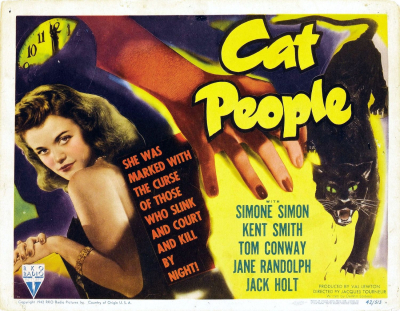
In modern terms, Stephen King used cats in his stories to great effect. I showed the title to his short story “The Cat from Hell” as a joke to my parents, but, in all honesty, it is a harrowing account about murderous cat who has it out for an old household and the assassin who is hired to deal with the issue. The tale was adapted to great effect in Tales from the Darkside: The Movie. A cat is also the main protagonist in the anthology horror film Cat’s Eye and gets to be the hero in the last story by saving a young Drew Barrymore from a troll. It’s a silly, but enjoyable movie.
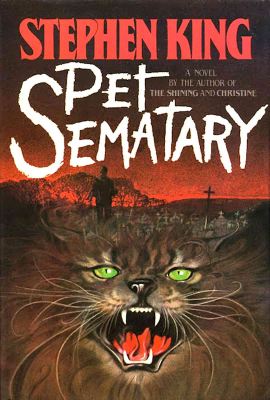
King’s most potent story featuring a cat has to be Pet Sematary, either the book or the first film. The cat in that story, Winston Churchill, is run over on the country road and the Creed’s neighbor decides to show the father Louis where he could bury the cat so that it could come back from the dead. It was a misguided act of sympathy for Louis’ daughter that became the catalyst (ha!) for the events of the story to follow. It is one of King’s most uncompromising novels and left a bad taste in his mouth after he wrote it. He only published it to fulfill an obligation with his publisher at the time. Despite my mixed feelings of seeing a cat turn evil, I think it is one of King’s most powerful books.
 This is everything that I’ve been able to pull from the top of my head as I write this. There are numerous stories involving cats in horror stories and while I love them, they are weird enough to be conducive to a good horror story. I don’t believe cats are evil but it’s not hard to depict them as such.
P.S. A little anecdote: one day, I was laying on the couch reading “The Dreams in the Witch House” by H.P. Lovecraft for the first time. I was getting to know about the evil rat-like familiar Brown Jenkin, who makes a grisly last appearance at the end of the story. I must’ve been wrapped up in the story because I saw a sudden movement from the corner of my eye and I caught my breath in terror. . .only to realize that it was my damn cat who moved behind me! That was over ten years ago and he’s still alive. He’s still a cute furball.
Written by Nick Montelongo
One of the earliest horrific stories I’ve ever read featuring cats is obviously “The Black Cat” by Edgar Allan Poe. If you’re not familiar, the tale is about a disturbed man who starts abusing his beloved pets. His black cat Pluto isn’t having it, though. No matter what happens, Pluto keeps returning, even from the dead, and haunts the main character to the point of revealing the hiding place of his wife’s murdered corpse at the end. Don’t read into this thinking that Poe was a pet abuser. He loved animals. Apparently, he had a cat named Katterina that sat over his shoulder as he wrote as if looking on in approval. “The Black Cat” was adapted for film several times, most notably in The Black Cat (1934) starring Bela Lugosi and Boris Karloff. There isn’t anything in the film that has any genuine connection to the story, but it’s still a cool movie about a POW camp survivor (Lugosi) who confronts the man who was responsible for his family’s deaths (Karloff), who is also the leader of a satanic coven. It was a rare semi-heroic role for Lugosi and one of his best performances. In 1941, Lugosi played in another film called The Black Cat in which he co-starred with Basil Rathbone. It is an “old dark house” mystery type of movie replete with murder, a gothic mansion, and secret passageways. Good fun for all.Numerous horror writers were cat people too. A cat plays a role in one of Lovecraft’s most important stories “The Rats in the Walls” although I won’t go out of my way to mention the feline’s name. Robert Bloch was known for loving cats and dedicated his novel Night-World to his pets. “Catnip” is one of his most famous stories that involves a witch’s revenge brought about by her feline familiar. “None So Blind” is an ironic story of a man whose death is foretold to him, and it involves some deadly encounters cats of different kinds only to have it end on a delightful and witty Blochian twist.
One of my favorite movies of all time is The Cat People (1940) produced by Val Lewton and directed by Jacques Tourneur about a man who falls in love with a girl from the old country who believes that if she gives into her sexual passions that she will turn into a large murderous cat. It is in equal parts psychological and supernatural horror. Rather than go for the obvious, Lewton and Tourneur relied on misdirection, clever camera angles, and suggestion rather than show somebody in a cat costume. The result is a cheap, but artfully made horror classic about love, jealousy, and misguided principals. The story was a loose adaptation from Algernon Blackwood’s story “Ancient Sorceries.”
In modern terms, Stephen King used cats in his stories to great effect. I showed the title to his short story “The Cat from Hell” as a joke to my parents, but, in all honesty, it is a harrowing account about murderous cat who has it out for an old household and the assassin who is hired to deal with the issue. The tale was adapted to great effect in Tales from the Darkside: The Movie. A cat is also the main protagonist in the anthology horror film Cat’s Eye and gets to be the hero in the last story by saving a young Drew Barrymore from a troll. It’s a silly, but enjoyable movie.
King’s most potent story featuring a cat has to be Pet Sematary, either the book or the first film. The cat in that story, Winston Churchill, is run over on the country road and the Creed’s neighbor decides to show the father Louis where he could bury the cat so that it could come back from the dead. It was a misguided act of sympathy for Louis’ daughter that became the catalyst (ha!) for the events of the story to follow. It is one of King’s most uncompromising novels and left a bad taste in his mouth after he wrote it. He only published it to fulfill an obligation with his publisher at the time. Despite my mixed feelings of seeing a cat turn evil, I think it is one of King’s most powerful books.
This is everything that I’ve been able to pull from the top of my head as I write this. There are numerous stories involving cats in horror stories and while I love them, they are weird enough to be conducive to a good horror story. I don’t believe cats are evil but it’s not hard to depict them as such.P.S. A little anecdote: one day, I was laying on the couch reading “The Dreams in the Witch House” by H.P. Lovecraft for the first time. I was getting to know about the evil rat-like familiar Brown Jenkin, who makes a grisly last appearance at the end of the story. I must’ve been wrapped up in the story because I saw a sudden movement from the corner of my eye and I caught my breath in terror. . .only to realize that it was my damn cat who moved behind me! That was over ten years ago and he’s still alive. He’s still a cute furball.
Written by Nick Montelongo
The author does not allow comments to this entry
No comments