I had never heard of an eighties horror novel called The Stalker. Had I seen it on the shelves at WaldenBooks, I'd have surely been interested. I tended to ignore the Zebra horror books of the time, but The Stalker had a laudatory quote from Peter Straub on its cover.
My enthusiasm was slightly dampened when I realized author Claude Teweles was once a Peter Straub student. So much for an unbiased opinion.
The Stalker would be lost to the ravages of time and hoarded collectors of Paperbacks from Hell titles if it wasn't reprinted by Crossroads Press in late 2024. I happened upon the Amazon listing and couldn't resist the prospect of unearhing a lost classic of the field.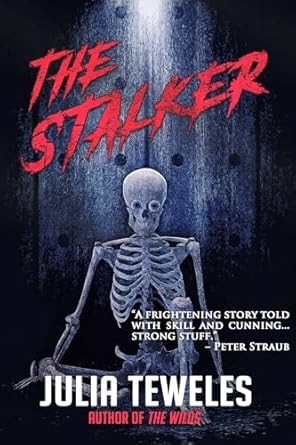
This is definitely a good novel, but don't expect The Stalker to be on the level of a rediscovered Chet Williamson or Thomas Tessier book. It's certainly far superior to the majority of other Zebra titles.
The Stalker is a curious book. We are all used to casual homophobia in older books and movies. Rarely do I read a book with blatant prejudice in it. There's a lot of gay panic in The Stalker. The young protagonist is accused of being gay numerous times in the course of the novel, and he not only vehemently denies it, he goes so far as to say that he would never hang around with a "faggot". Ouch. That's pretty severe.
So what? Another bigoted writer from the bad old days, right? Well, maybe.
The Stalker was originally written by "Claude Teweles". The reprinted edition is credited to "Julia Teweles". The author transitioned from man to woman.
Questions arise. Was Teweles commenting on prejudiced ways of the time the book was written? Perhaps Teweles was unaware of her true nature but felt inner shame and loathing?
I'm going to give Julia Teweles the benefit of the doubt. I'm sure coming to grips with herself wasn't easy and that she went through a lot of complicated emotions.
The story takes place in a creepy old seed factory, which is vividly portrayed. A family on the verge of financial and emotional collapse inherit Nagy Seeds, and the father moves his family to his old hometown to try to make a go of it.
Only there's something more than spores and seeds in the old building. Old man Nagy, decades dead, lurks in its dusty corridors. He was a wicked soul who abused his employees and wore his wife's attire as he lusted over a young male worker.
I gotta tell you, reading The Stalker was often an uncomfortable experience. Oh, it's well written, evocative, scary, and at times gripping, but a lot of the subject matter was inappropriate back in the early eighties. Today it's nearly criminal.
If that's not enough, there's a lot of implied cat deaths. Despite being a feline lover and one who tends for a lot of ferals, fictional cat deaths bother me no more than human murder.
I felt a little dirty after reading The Stalker, as if I had been rolling around on dusty bags of seed. I enjoyed some things about this exhumed novel, but I don't think I'll look up any more old Teweles books. This one didn't sit right with me.
Written by Mark Sieber
My enthusiasm was slightly dampened when I realized author Claude Teweles was once a Peter Straub student. So much for an unbiased opinion.
The Stalker would be lost to the ravages of time and hoarded collectors of Paperbacks from Hell titles if it wasn't reprinted by Crossroads Press in late 2024. I happened upon the Amazon listing and couldn't resist the prospect of unearhing a lost classic of the field.
This is definitely a good novel, but don't expect The Stalker to be on the level of a rediscovered Chet Williamson or Thomas Tessier book. It's certainly far superior to the majority of other Zebra titles.
The Stalker is a curious book. We are all used to casual homophobia in older books and movies. Rarely do I read a book with blatant prejudice in it. There's a lot of gay panic in The Stalker. The young protagonist is accused of being gay numerous times in the course of the novel, and he not only vehemently denies it, he goes so far as to say that he would never hang around with a "faggot". Ouch. That's pretty severe.
So what? Another bigoted writer from the bad old days, right? Well, maybe.
The Stalker was originally written by "Claude Teweles". The reprinted edition is credited to "Julia Teweles". The author transitioned from man to woman.
Questions arise. Was Teweles commenting on prejudiced ways of the time the book was written? Perhaps Teweles was unaware of her true nature but felt inner shame and loathing?
I'm going to give Julia Teweles the benefit of the doubt. I'm sure coming to grips with herself wasn't easy and that she went through a lot of complicated emotions.
The story takes place in a creepy old seed factory, which is vividly portrayed. A family on the verge of financial and emotional collapse inherit Nagy Seeds, and the father moves his family to his old hometown to try to make a go of it.
Only there's something more than spores and seeds in the old building. Old man Nagy, decades dead, lurks in its dusty corridors. He was a wicked soul who abused his employees and wore his wife's attire as he lusted over a young male worker.
I gotta tell you, reading The Stalker was often an uncomfortable experience. Oh, it's well written, evocative, scary, and at times gripping, but a lot of the subject matter was inappropriate back in the early eighties. Today it's nearly criminal.
If that's not enough, there's a lot of implied cat deaths. Despite being a feline lover and one who tends for a lot of ferals, fictional cat deaths bother me no more than human murder.
I felt a little dirty after reading The Stalker, as if I had been rolling around on dusty bags of seed. I enjoyed some things about this exhumed novel, but I don't think I'll look up any more old Teweles books. This one didn't sit right with me.
Written by Mark Sieber
The author does not allow comments to this entry
No comments