While I’m not really a fan of classic Hollywood movies, I love reading about the history of the industry.
Moguls is the story of two immigrants, Nicholas and Joseph Schenck, who were among the primary few who founded motion picture cinema. Their names aren’t as familiar as Meyer, Zukor, Zanuck, Warner, and Goldwyn, but Nick and Joe were instrumental in the development of the industry. These guys avoided the limelight and they weren’t involved in the kind of scandals that plagued their contemporaries.
The Schencks came to America, dirt poor as so many others did. They started by selling newspapers on the corner for a penny profit. They were shrewd, smart, and industrious. Their hands were deep into the fabled New Jersey’s famed Palisade’s Park, but Nick and Joe really made it big in moving pictures.
It began with nickelodeons and flicker machines, then moved up to silent movies. The two visionaries invested time and money to create vast movie houses, and in doing so planted the seeds through which we would eventually be treated to Tom Green and Kevin Spacey.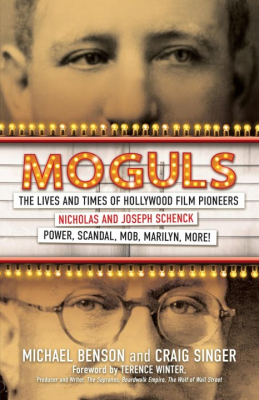
New York was the cultural hub of America, but crime and competition became too disruptive, so they carried their businesses as far away as they possibly could. They went to a place where the weather was always nice, there was plenty of nearby space to shoot westerns and other adventure movies. It meant little at the time, but the name of Hollywood eventually took on mythic proportions.
The Schencks and the other moguls made fortunes in the silent movie business. They created the star system. They were reluctant to bring sound to their productions. It sounded preposterous, but they weathered the transition through to the talkies.
The depression, world war, scandals and censors plagued the movie business. Eventually television took an enormous bite out of the profits, as did home video and streaming in later years. Still, the movies endure.
There were numerous periods when it seemed like the movie industry would collapse, but here we are, still going strong. Strong enough, anyway. When things look darkest along comes Jaws, Star Wars, Pulp Fiction, Barbie, Oppenheimer, Obsession, Backrooms.
What’s next? If someone could predict that, they’d be a Billionaire.
I’m grateful to all the moguls who gave us this most American of art forms. Hollywood is synonymous with the movies, but filmmakers from all over the world reflect the world, and our dreams, through moving pictures.
Moguls is an informative book, but it suffers from graceless writing. It isn’t bad, but I wasn’t enamored of the prose. When the authors did try to be entertaining, it often seemed more clunky than clever.
Some things about the book, and the Schencks, bothered me.
Like too many rich people, the Schenks resented the very idea of taxes. Yeah, they sucks, but working stiffs like me give up a substantial portion of our paychecks for them. Nick and Joe did their best to avoid them, and largely succeeded.
It would be different if they poured all their profits back into the movies, but they spent money like it was confetti. They blew tens of thousands on parties, boats, and gala events. They gifted their friends and their lovers with cars, houses, and jewelry. The guys spent hundreds of dollars a week on groceries. Everyone does that now, but back then it was insanely extravagant. Buckets of caviar, exotic food and liquor. Every imaginable decadence was at their fingertips.
They could have had most of that and still paid their taxes. No, that’s for the rubes who buy tickets and make them wealthy.
Another part that bristled me is when the mob put the squeeze on the Schencks. Cheap hoods put pressure on theater projectionists. Then mob representatives visited Nick and said that if the studio didn’t make a hefty payment each month, their movies wouldn’t play. Out of fear for their safety and their family’s safety, the projectionists would do whatever the mobsters requested.
The solution? Simple! Raise union rates, squeeze the workers a little more, and pay the mob with the money. Oh, and keep a little extra for themselves in the bargain. Guess who got screwed? The same ones who always get the bad end of the deal.
Having been a worker all my life, I will always be on their side.
The following did more than bother me. It made me sick.
Moguls reveals the shocking details of the Girl 27 case. MGM held a giant extravaganza event in celebration of their profits during the great depression. One-hundred-and-twenty women were invited. They were told it would be for auditions, but movie executive Louis B. Mayer publicly spoke to his guests, saying “These lovely girls-and you have the finest of them-greet you. And that’s to show you how we feel about you and the kind of good time that’s ahead of you. Anything you want!”
Twenty-year-old Patricia Douglas, a woman who neither drank nor dated, had liquor forced down her throat, then she was brutally raped. She went to a hospital to be treated, but the doctor was in MGM’s pocket. Upon release Douglas was paid $7.50 for attending the party. When she filed a complaint, Douglas became the target of a smear campaign from the studio. She was dismissed as a whore, and rumors were spread that her hospital visit was for venereal disease treatment. Patricia Douglas was disgraced and ruined, while the profits continued to pour in.
The Schencks were reportedly disgusted by the story, but not disturbed enough to do anything about it. Business was too good to have it all come down because of a hysterical woman.
Too much money and power brings about corruption. The world of entertainment has too many predators. Fatty Arbuckle to Bill Cosby, Harvey Weinstein, to Puff Daddy. Me Too came along later than it should have, but at least there’s been some progress.
I wish the history of the movies wasn't so horrible.
Written by Mark Sieber
Moguls is the story of two immigrants, Nicholas and Joseph Schenck, who were among the primary few who founded motion picture cinema. Their names aren’t as familiar as Meyer, Zukor, Zanuck, Warner, and Goldwyn, but Nick and Joe were instrumental in the development of the industry. These guys avoided the limelight and they weren’t involved in the kind of scandals that plagued their contemporaries.
The Schencks came to America, dirt poor as so many others did. They started by selling newspapers on the corner for a penny profit. They were shrewd, smart, and industrious. Their hands were deep into the fabled New Jersey’s famed Palisade’s Park, but Nick and Joe really made it big in moving pictures.
It began with nickelodeons and flicker machines, then moved up to silent movies. The two visionaries invested time and money to create vast movie houses, and in doing so planted the seeds through which we would eventually be treated to Tom Green and Kevin Spacey.
New York was the cultural hub of America, but crime and competition became too disruptive, so they carried their businesses as far away as they possibly could. They went to a place where the weather was always nice, there was plenty of nearby space to shoot westerns and other adventure movies. It meant little at the time, but the name of Hollywood eventually took on mythic proportions.
The Schencks and the other moguls made fortunes in the silent movie business. They created the star system. They were reluctant to bring sound to their productions. It sounded preposterous, but they weathered the transition through to the talkies.
The depression, world war, scandals and censors plagued the movie business. Eventually television took an enormous bite out of the profits, as did home video and streaming in later years. Still, the movies endure.
There were numerous periods when it seemed like the movie industry would collapse, but here we are, still going strong. Strong enough, anyway. When things look darkest along comes Jaws, Star Wars, Pulp Fiction, Barbie, Oppenheimer, Obsession, Backrooms.
What’s next? If someone could predict that, they’d be a Billionaire.
I’m grateful to all the moguls who gave us this most American of art forms. Hollywood is synonymous with the movies, but filmmakers from all over the world reflect the world, and our dreams, through moving pictures.
Moguls is an informative book, but it suffers from graceless writing. It isn’t bad, but I wasn’t enamored of the prose. When the authors did try to be entertaining, it often seemed more clunky than clever.
Some things about the book, and the Schencks, bothered me.
Like too many rich people, the Schenks resented the very idea of taxes. Yeah, they sucks, but working stiffs like me give up a substantial portion of our paychecks for them. Nick and Joe did their best to avoid them, and largely succeeded.
It would be different if they poured all their profits back into the movies, but they spent money like it was confetti. They blew tens of thousands on parties, boats, and gala events. They gifted their friends and their lovers with cars, houses, and jewelry. The guys spent hundreds of dollars a week on groceries. Everyone does that now, but back then it was insanely extravagant. Buckets of caviar, exotic food and liquor. Every imaginable decadence was at their fingertips.
They could have had most of that and still paid their taxes. No, that’s for the rubes who buy tickets and make them wealthy.
Another part that bristled me is when the mob put the squeeze on the Schencks. Cheap hoods put pressure on theater projectionists. Then mob representatives visited Nick and said that if the studio didn’t make a hefty payment each month, their movies wouldn’t play. Out of fear for their safety and their family’s safety, the projectionists would do whatever the mobsters requested.
The solution? Simple! Raise union rates, squeeze the workers a little more, and pay the mob with the money. Oh, and keep a little extra for themselves in the bargain. Guess who got screwed? The same ones who always get the bad end of the deal.
Having been a worker all my life, I will always be on their side.
The following did more than bother me. It made me sick.
Moguls reveals the shocking details of the Girl 27 case. MGM held a giant extravaganza event in celebration of their profits during the great depression. One-hundred-and-twenty women were invited. They were told it would be for auditions, but movie executive Louis B. Mayer publicly spoke to his guests, saying “These lovely girls-and you have the finest of them-greet you. And that’s to show you how we feel about you and the kind of good time that’s ahead of you. Anything you want!”
Twenty-year-old Patricia Douglas, a woman who neither drank nor dated, had liquor forced down her throat, then she was brutally raped. She went to a hospital to be treated, but the doctor was in MGM’s pocket. Upon release Douglas was paid $7.50 for attending the party. When she filed a complaint, Douglas became the target of a smear campaign from the studio. She was dismissed as a whore, and rumors were spread that her hospital visit was for venereal disease treatment. Patricia Douglas was disgraced and ruined, while the profits continued to pour in.
The Schencks were reportedly disgusted by the story, but not disturbed enough to do anything about it. Business was too good to have it all come down because of a hysterical woman.
Too much money and power brings about corruption. The world of entertainment has too many predators. Fatty Arbuckle to Bill Cosby, Harvey Weinstein, to Puff Daddy. Me Too came along later than it should have, but at least there’s been some progress.
I wish the history of the movies wasn't so horrible.
Written by Mark Sieber
The author does not allow comments to this entry
No comments